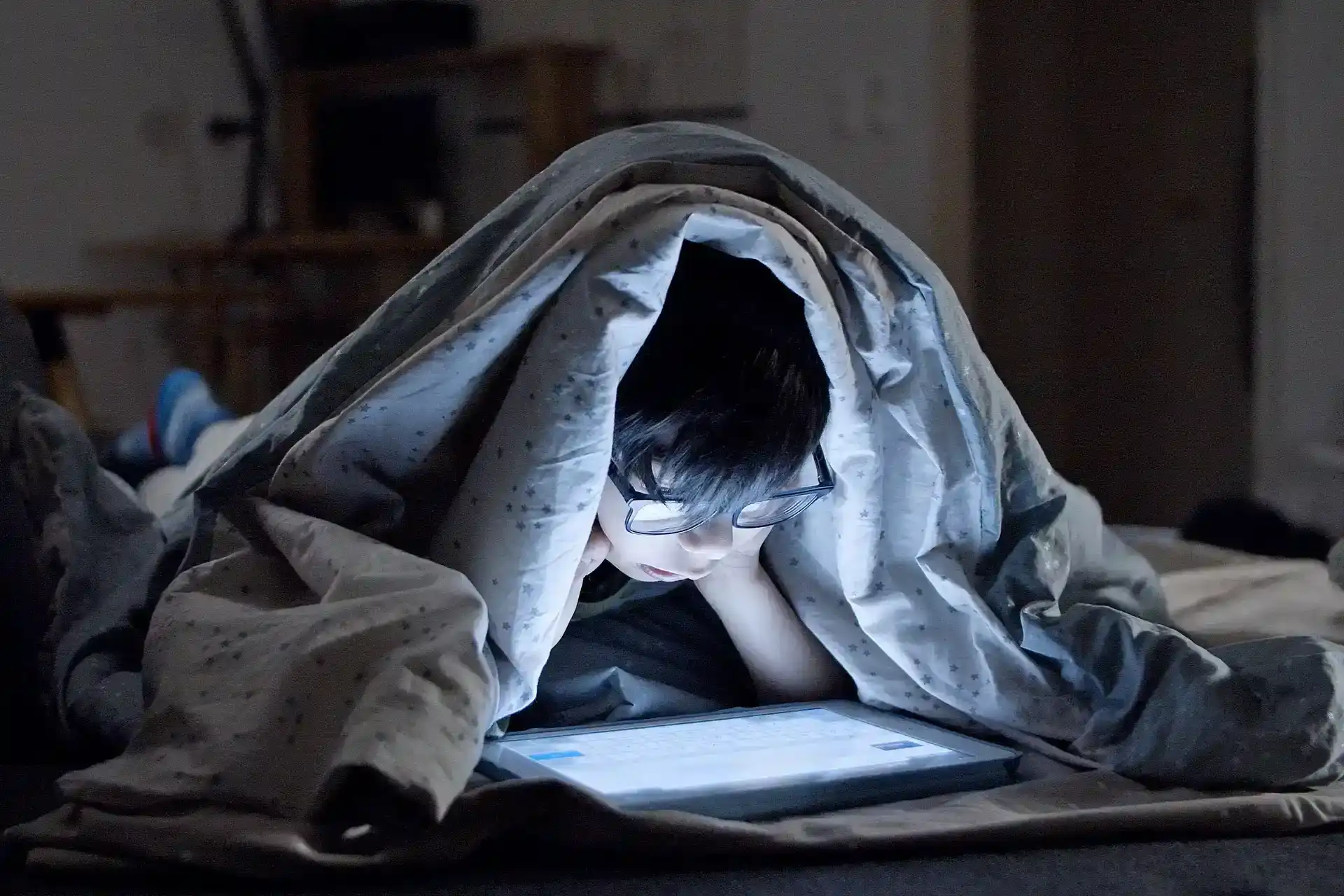
The Screen Time Pandemic: Progressive Myopia in School-Aged Children
Blogs
In recent years, families across Srinagar have noticed a striking trend: children are being prescribed glasses at increasingly younger ages, and their prescriptions are requiring stronger updates year after year. This condition commonly known as nearsightedness or shortsightedness is clinically termed myopia. When a child's vision worsens rapidly during their growth years, it enters a stage known as progressive myopia.
While many parents view a stronger prescription as simply a minor inconvenience requiring a new pair of lenses, clinical data highlights a more profound biological reality. At Keen Sight Optical Chamber in Soura, we emphasize that early identification and evidence-based management are crucial to controlling this progression and safeguarding your child's long-term eye health.
Part 1: The Biomechanics of Progressive Myopia
1. Understanding Axial Elongation
To understand why a child's eyesight degrades rapidly, we must look at the physical structure of the growing eye. In a perfectly balanced eye, light passes through the front cornea and crystalline lens, focusing precisely on the retina at the back of the eye to produce a sharp image.
Myopia occurs when the physical distance from the front of the eye to the back known as the axial length grows too long. Because the eyeball stretches abnormally into an oblong shape, light rays from distant objects fall short of the retina, causing far vision to appear blurred and distorted.
- The Childhood Growth Danger: As a child's body goes through rapid growth spurts, the tissues of the eye are uniquely vulnerable to stretching. If the eye grows even one millimeter too long axially, it causes a significant change of roughly -3.00 diopters in prescription strength.
- Long-Term Tissue Strain: When the eyeball elongates continuously, it physically pulls and thins the delicate retinal layers, blood vessels, and structural tissues at the back of the eye. This structural thinning increases the baseline risk for complex ocular challenges later in adult life.
Part 2: The Environmental Triggers of the Modern Era
1. Hyper-Focus and the Lack of Natural Light
While genetics play an undeniable foundation a child with two myopic parents is at a much higher statistical risk, the global surge in progressive childhood myopia is heavily driven by modern lifestyle modifications. The combination of intense educational pressure and excessive digital screen time has created a perfect storm for developing eyes:
- Peripheral Defocus from Screen Proximity: Holding mobile phones, tablets, or textbooks closer than 30 centimeters for hours at a time forces the inner focusing muscle (the ciliary muscle) into a state of chronic contraction. This prolonged stress sends a biological signal to the eye to lengthen itself to make close-up work less exhausting.
- The Dopamine Connection in Sunlight: Natural outdoor sunlight triggers the release of a specialized chemical messenger called dopamine inside the retina. Retinal dopamine acts as a natural brake system, controlling the rate of eyeball growth and maintaining an ideal shape. Children spending their days indoors miss this vital regulatory cue.
Actionable Step: The 20-20-20 Rule & Outdoor Play
Families can actively slow down environmental eye strain by enforcing simple, protective daily habits at home.
Implement the 20-20-20 Rule: For every 20 minutes of digital screen use or continuous reading, have your child look at an object at least 20 feet away for at least 20 seconds. This action allows the internal focusing mechanisms to relax completely. Additionally, ensure your child gets 60 to 90 minutes of outdoor play daily during daylight hours to support natural structural development.
Part 3: Contemporary Clinical Intervention Standards
1. Comprehensive Pediatric Eye Screenings
Standard school screenings often miss progressive changes because they only test basic visual clarity on a distant wall chart. A true pediatric assessment requires precise slit-lamp biomicroscopy and cycloplegic refraction—using specialized temporary drops to safely relax the child's focusing muscles to map the true, unmasked shape of the eye matrix.
When rapid elongation is caught early by an eye care specialist, contemporary management protocols can actively slow prescription progression down. These specialized options include custom peripheral defocus spectacle lenses and targeted low-dose therapeutic drops administered nightly under strict medical guidance.
Clinical Safety Notice: Children rarely complain about changing vision because they assume everyone sees the world through the same blurry or distorted filter. Watch for subtle indicators like frequent eye rubbing, habitual squinting while watching television, tilting the head, or a sudden drop in school performance.
1. International Myopia Institute (IMI White Papers). Clinical Guidelines for Childhood Myopia Progression and Control.
2. World Health Organization (WHO Report). The Impact of Myopia and High Myopia on Global Public Health Safety.
3. American Academy of Ophthalmology (AAO Pediatric Section). Slowing Eyeball Elongation: Evidence-Based Optical Interventions. San Francisco, CA.
Verify Your Child's Vision Safety Profile
Don't let progressive strain affect your child's developmental future. Access our patient verification network to evaluate treatment guidelines and verify safety metrics.
Explore the Patient Medication Safety HubProfessional Medical Disclaimer: The information provided in this educational publication is intended strictly for general informational, reference, and search-optimization purposes. It does not constitute, nor should it ever substitute for, professional medical advice, clinical diagnosis, or direct treatment from a qualified healthcare provider. Never disregard expert medical guidance or delay seeking clinical care because of something you have read on this website. If your child is experiencing sudden vision loss, localized physical pain, or rapidly accelerating ocular tracking strain, please consult a physician or visit an emergency medical facility immediately.